

Tactile vs. Non-Tactile Membrane Switches: Which Fits Your Application?
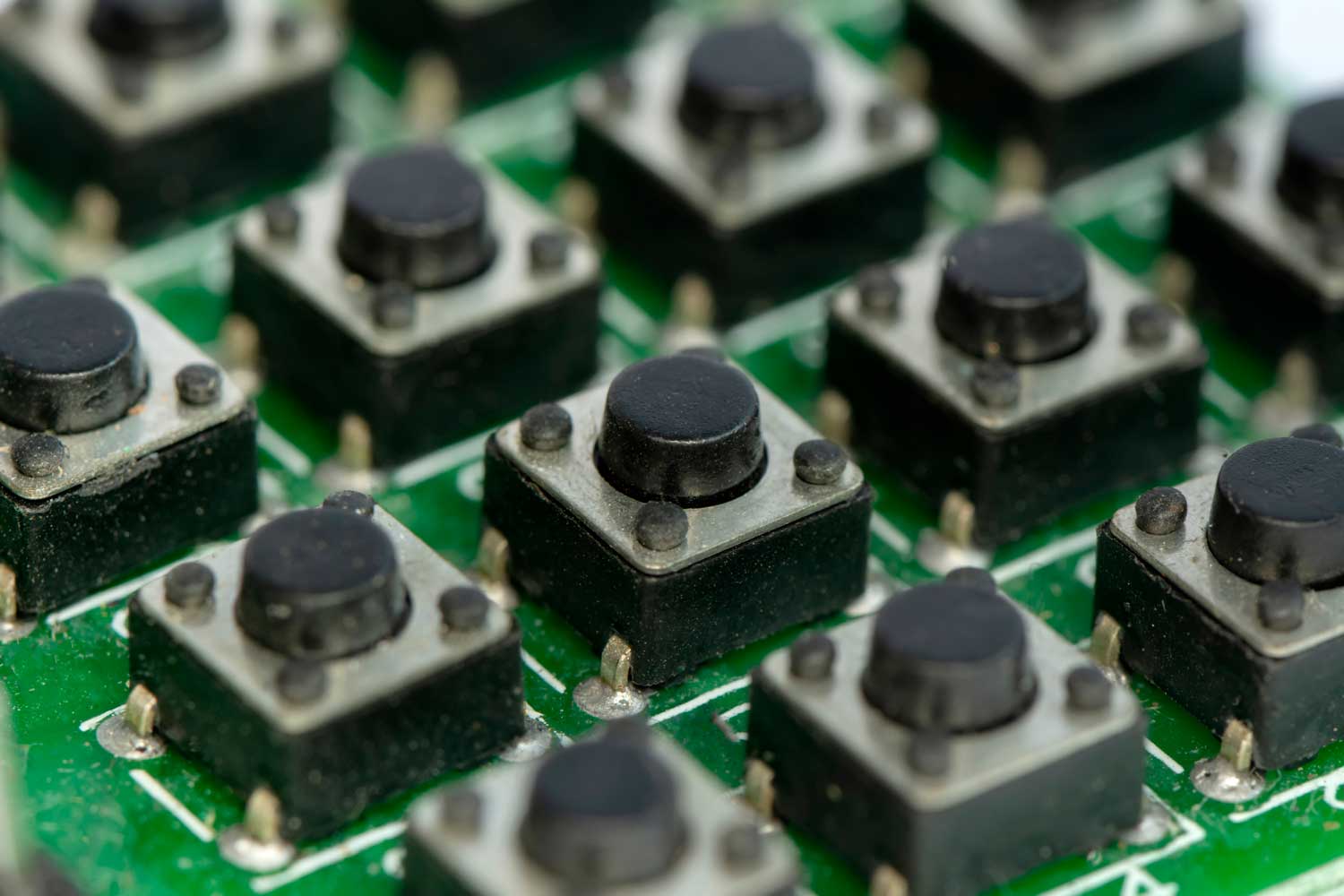
The choice between a tactile membrane switch and a non-tactile flat panel comes down to an inherent conflict in interface engineering: the operator’s need for physical confirmation versus the system’s need for environmental integrity. Both designs share the same foundational architecture: a graphic overlay bonded to a conductive circuit layer, but they differ significantly in how they handle actuation feedback, sealing geometry, and long-term mechanical behavior. Specifying the wrong type means either a panel that fails in a washdown environment or an interface that generates operator errors because users cannot confirm activation without looking away from the task. The decision must be resolved through exact CAD specifications before tooling begins. Precision prevents field failures.
Understanding the Core Difference: Tactile vs. Non-Tactile Feedback
Tactile feedback in a membrane switch comes from a physical mechanism embedded beneath the graphic overlay. When a user presses a tactile dome switch, a metal or polyester dome collapses under finger pressure, producing a distinct snap sensation that signals circuit closure. That physical confirmation matters most when operators are working under conditions where visual verification is slow, impractical, or dangerous: gloved hands on industrial machinery, sterile environments where sustained eye contact with a panel is interrupted, or high-stress control scenarios where a missed actuation carries real consequences. Engineers designing custom membrane switches for these contexts treat the tactile snap as a functional requirement, not an ergonomic preference.
Non-tactile membrane switches eliminate the dome layer entirely. This simplifies the stack-up. The graphic overlay sits directly above the circuit layers, and actuation happens when the user presses the surface far enough to bridge the conductive gap beneath. There is no physical snap, no audible click, and no mechanical resistance gradient; the interface relies on secondary feedback channels, typically an LED indicator, an audible beep from the device, or a display update, to confirm that a keypress registered. Flat panel membrane switches built this way achieve a continuous, uninterrupted surface that can be sealed against ambient pollutants, which is why they dominate in medical, food processing, and outdoor equipment applications where sanitation and ingress protection outweigh the need for physical feedback.
Physical Mechanics and Material Selection: Metal Domes vs. Flat Panels
The mechanical differences between tactile and non-tactile designs show up most clearly in travel distance and actuation force. A tactile switch has a short but perceptible physical travel: the distance the overlay surface moves before the dome collapses and the circuit closes. Travel distance dictates tactile feel. That travel is brief, but it is distinct enough that a trained operator can feel the actuation point without pressing all the way to the hard stop. Non-tactile switches have minimal displacement by comparison; the surface deflects only slightly before contact is made, and there is no defined mechanical breakpoint in the stroke. Whether those differences matter depends entirely on the operator’s environment and the precision demands of the input task. Comparing membrane switch keypads to mechanical alternatives often highlights this travel distinction most clearly, and the membrane switch keypads resource covers that comparison in depth for engineers weighing their options.
Actuation force follows a similar characteristic trend. Metal dome tactile switches require more deliberate pressure than polyester dome variants, and both require more force than a non-tactile flat panel where the threshold is governed by the circuit gap geometry alone. That force differential has operational implications for glove-operated applications: a panel calibrated too light triggers false actuations from incidental contact, while one calibrated too heavy fatigues operators across a long shift. The right specification depends on the use case, the operator’s typical hand protection, and the acceptable error rate for the application, all of which must be resolved with a manufacturer before committing to a dome type.
- Metal domes: High cycle life, a crisp and repeatable snap, and a well-defined actuation point that stays consistent across the panel. The cost per unit runs higher than polyester alternatives, and the dome assembly adds measurable thickness to the overall stack-up. Common in tactile membrane keyboard designs and safety-critical control panels where operator confidence in each keypress is a design requirement.
- Polyester domes: A moderate tactile feel with a lower profile than metal domes. Cost-effective at higher production volumes and easier to integrate into thinner panel configurations. The snap sensation is softer and less defined, which suits applications where some tactile feedback is useful but the crisp, sharp click of a metal dome is not necessary.
- Flat panels: Carry no dome layer. This design offers the lowest possible profile, the simplest stack-up, and the greatest flexibility in overlay geometry, but the entire feedback burden shifts to the device’s secondary systems, so those systems must be reliable and perceptible in the operating environment.
Anagraphica’s engineering team in Salt Lake City, Utah works through dome type, overlay material, and production volume together before quoting, supporting supply chain risk elimination rather than providing a generic catalog price. If you are at the specification stage and require a detailed cost projection of what custom membrane switches for your application cost to produce, reach out to start that technical evaluation.
Environmental Sealing and Durability in Harsh Environments
[Inline Image]PLACEHOLDER Exploded-view technical diagram of a sealed non-tactile membrane switch stack-up. Layers are separated vertically to reveal the graphic overlay, adhesive bonding layer, spacer with key cutouts, top conductive circuit layer, bottom conductive circuit layer, and rear substrate. The continuous flat surface of the overlay is visually emphasized with a clean edge highlight. Clinical white background, precise technical illustration style with subtle color-coding for each layer, professional engineering documentation aesthetic with fine detail lines.[/Inline Image]
The sealing advantage of non-tactile designs is structural, not incidental. A flat, continuous overlay with no embossed domes and no surface discontinuities can be bonded to the underlying layers with an unbroken perimeter seal. Moisture, cleaning agents, and particulates have no geometric pathway into the circuit layers. Sealing prevents ingress. For medical equipment that undergoes repeated high-pressure washdowns, or food processing machinery exposed to caustic sanitizers between production runs, that hermetic sealing capability is often the deciding factor in the design. Tactile designs introduce surface geometry, such as embossed domes or raised key areas, that creates potential ingress points around the perimeter of each button, making complete sealing more difficult to achieve and maintain over the product’s service life. A washable membrane switch design for a clinical environment almost always resolves toward a non-tactile flat panel for exactly this reason.
The lifespan question is equally unbalanced. Non-tactile switches generally outlast their tactile counterparts in terms of raw physical longevity, because there are no metal or polyester dome components to fatigue and fail. Each actuation on a tactile switch stresses the dome through its collapse cycle; over time, that repeated deformation gradually shifts the snap force and can eventually cause the dome to lose its return characteristics, producing a soft or inconsistent feel that operators notice before the switch fails electrically. Non-tactile switches do not carry that failure mode. The trade-off is that the graphic overlay on a non-tactile panel absorbs more direct contact force, so overlay material selection and sub-surface printing become more consequential to long-term durability than they are in a dome-based design.
Sub-surface printing on polyester or polycarbonate overlays keeps the ink and graphics protected beneath the wear surface, which matters when the panel is exposed to chemical solvents, UV radiation, or abrasive cleaning processes over years of service. Anagraphica’s vertically integrated manufacturing in Salt Lake City handles both the overlay printing and the switch assembly under the same roof, which ensures zero-defect quality control as material selection, tolerance conformance, and stack-up geometry are coordinated rather than handed off between vendors. Maintaining tight mechanical tolerances across the full temperature range of the application, particularly for panels installed in outdoor enclosures, industrial freezers, or high-heat processing environments, requires that kind of process continuity from artwork to finished assembly.
- Liquid exposure: High-pressure washdowns or chemical solvents favor non-tactile flat panel designs with continuous perimeter sealing and sub-surface printed overlays.
- Particulate management: Dust, dirt, and airborne particulates are managed by both design types, but the absence of surface geometry on non-tactile panels eliminates the accumulation sites that embossed tactile keys can create.
- Environmental stability: Operating temperature extremes and UV exposure drive overlay and adhesive material selection independent of whether the design is tactile or non-tactile; both types require environmental exposure testing to verify material compatibility at the specification stage.
Application-Specific Selection: Matching Switch Types to Industry Needs
Medical devices like infusion pumps, ventilators, and surgical control units represent the clearest case for tactile feedback. Fingertip confirmation prevents critical errors. Clinicians operating these devices often cannot maintain continuous visual contact with the interface: they are watching the patient, monitoring a separate display, or working in reduced lighting. A tactile membrane switch gives them confirmation of each input through the fingertip alone, reducing the risk of missed or double actuations without requiring a glance at the panel. Aerospace and defense control systems operate under the same logic: when an operator is managing multiple simultaneous inputs under high cognitive load, physical confirmation of each actuation functions as a reliability layer, not a comfort feature. Glove-operated industrial machinery adds another dimension: thick work gloves reduce fingertip sensitivity substantially, so the snap force and travel of the dome need to be calibrated for reduced tactile transmission through the glove material. Salt Lake City’s concentration of medical device manufacturers and aerospace and defense contractors makes these requirements a frequent engineering hurdle, and it is one that comes up frequently in early-stage conversations with Anagraphica’s engineering team.
Non-tactile designs, meanwhile, earn their place in applications where the operating environment is the primary limitation. Survival comes first. Outdoor kiosks, marine electronics, food processing control stations, and laboratory instruments all share a common requirement: the interface must survive the environment before it can serve the operator. When the panel will be hosed down, submerged, or exposed to aggressive cleaning chemistry on a regular schedule, the sealing geometry of a flat non-tactile panel is the more defensible design choice. Secondary feedback, such as a display confirmation, an audible tone, or an LED state change, can be engineered to be perceptible even in noisy or visually busy environments, which addresses the feedback gap without compromising the seal.
[Inline Image]PLACEHOLDER Industrial operator in a manufacturing environment pressing a tactile membrane switch panel mounted on heavy machinery. The operator wears thick work gloves and is focused on the machine process, not the interface panel. The control panel shows embossed tactile buttons with high-contrast labeling. Warm industrial ambient lighting with a shallow depth of field, the interface in sharp focus, documentary photography style that emphasizes real-world operational context and the physical interaction between gloved hand and panel surface.[/Inline Image]
If your application involves safety-critical inputs, eyes-free operation, or gloved users, Anagraphica’s engineering team is available to work through your interface requirements directly. Call (801) 975-9900 or reach out through the website to start a conversation about your design specifications. Customers who have worked with the team describe the experience in direct terms, as Joe T. put it: “Great people, great service.”
The Hybrid Approach: Combining Tactile and Non-Tactile Elements
Most real-world interface designs do not fit cleanly into one category. A control panel for an industrial press might have four critical function keys (power, emergency stop, cycle start, cycle hold) where tactile feedback is genuinely important for operator safety, alongside a twelve-key numeric entry pad where the operator is watching a display and tactile confirmation adds cost without adding safety value. Designing those two zones with different feedback characteristics on a single panel is a standard capability in custom membrane switch manufacturing, and it is often the most cost-effective path to a design that meets both usability and budget requirements without compromising either.
- Tactile zones: Applied to critical functions, including power, emergency stop, and start/stop controls, where physical confirmation reduces the risk of missed or unintended actuation and supports eyes-free operation.
- Non-tactile zones: Specified for secondary functions like menu navigation, numerical data entry, or mode selection, where visual display feedback is sufficient, and the cost of dome components is not justified by the safety profile of those inputs.
- Integrated stack-up: A coordinated material stack-up across both zones simplifies manufacturing routing and keeps the overlay geometry consistent, which matters for maintaining sealing integrity across the full panel surface.
Cost optimization in hybrid designs goes beyond comparing unit prices for metal domes versus polyester domes. The total cost of ownership includes field failures, warranty returns, and operator error rates, all of which a well-specified interface design can reduce. Custom embossing and selective texturing on non-tactile zones can provide spatial orientation for operators without the mechanical complexity of dome components, which is worth evaluating when the budget does not support a full tactile implementation across the panel. Anagraphica’s vertical integration across printing, laminating, and assembly means that design changes at the overlay level do not require a separate vendor conversation, which compresses lead times and keeps iteration costs manageable through the development cycle.
Frequently Asked Questions About Membrane Switch Design
Are membrane switches tactile?
Membrane switches can be either tactile or non-tactile depending on their construction. Both options serve distinct functions. The flat, non-tactile version is common across general consumer and industrial equipment, but tactile variants using metal domes or polyester domes are widely manufactured and specified for applications where physical feedback is a functional requirement. The dome sits beneath the graphic overlay and collapses under finger pressure to complete the circuit, producing the snap sensation that distinguishes a tactile design from a flat panel.
Why do people not like tactile switches?
In consumer electronics and keyboard applications, the criticisms of tactile interfaces usually center on inconsistency and noise. The snap force can feel different across keys on the same panel if dome tolerances vary, and the audible click, present in some tactile designs, becomes distracting in quiet environments or during rapid input sequences. For gaming or high-speed data entry, some users find the physical bump interrupts their input cadence rather than supporting it. Industrial applications tend to produce the opposite response: operators who rely on tactile confirmation for safety-critical inputs generally prefer the feedback and notice its absence when a panel is replaced with a flat non-tactile design.
How does a tactile switch work?
In a membrane switch context, the tactile mechanism is a dome, either stamped metal or formed polyester, positioned beneath the graphic overlay at each key location. When the user applies pressure, the overlay deflects and transfers force to the dome. At a defined force threshold, the dome buckles and collapses, completing the electrical circuit between the top and bottom conductive layers and simultaneously producing the snap sensation the operator feels through the fingertip. When pressure is released, the dome returns to its original geometry, opening the circuit and resetting the key for the next actuation. The snap force and travel distance are determined by the dome’s geometry and material properties, which is why dome selection is one of the primary levers for tuning the feel of a tactile membrane switch to a specific application.
How does a membrane switch work?
A membrane switch closes an electrical circuit by pressing a flexible conductive layer down onto a stationary conductive layer beneath it. The basic stack-up runs from the graphic overlay at the top, through an adhesive layer, to a flexible top circuit layer, then a spacer layer with cutouts at each key location, and finally a rear circuit layer bonded to the substrate. When the user presses a key, the top circuit layer deflects through the spacer cutout and makes contact with the bottom circuit layer, completing the circuit. In a non-tactile design, that deflection is the entire mechanical event. In a tactile design, a dome is added to the stack-up to create a defined actuation point and a physical snap within that deflection path.
What are the different types of membrane switches?
The main categories are flat non-tactile membrane switches, tactile membrane switches using polyester domes, and tactile membrane switches using metal domes. Flat switches have no dome layer and rely entirely on secondary feedback from the device. Polyester dome switches form the dome from the same flexible film used in the circuit layers, giving a softer tactile response at lower cost and a thinner overall profile. Metal dome switches use stamped stainless steel domes for a sharper snap, longer cycle life, and more consistent actuation force across the panel. Each type suits different combinations of environmental requirements, operator workflow, and production volume, and hybrid panels can combine dome types within a single design to match different key functions to their appropriate feedback characteristics.
Contact the Anagraphica Team Today
The decision between tactile and non-tactile membrane switches rarely resolves around a single variable. Environmental sealing requirements, operator workflow, safety classification, and production volume all pull in different directions, and the right design usually involves trade-offs that only become clear when the full application context is on the table. What holds across well-specified designs is that the feedback mechanism, whether physical, visual, or auditory, is treated as a functional requirement from the start rather than an afterthought addressed during validation testing.
Anagraphica manufactures both tactile and non-tactile membrane switches from its Salt Lake City, Utah facility, with vertically integrated printing, laminating, and assembly capabilities that give engineering teams exact control over material selection, tolerances, and lead times. Whether the project calls for a sealed flat panel for a medical washdown environment, a metal dome tactile array for a safety-critical control station, or a hybrid design that combines both approaches on a single panel, the manufacturing process is built to accommodate the specification rather than constrain it.
Ready to move your membrane switch project from specification to production? Anagraphica’s engineering team in Salt Lake City, Utah, is available at (801) 975-9900 to discuss your application requirements. From overlay material selection to dome type and stack-up geometry, the team works through the design details before tooling begins. This ensures precision. Explore the full range of custom printing solutions available, or reach out directly to start the conversation.
“Nothing but high praise, best quality great pricing. I will never go anywhere else amazing job and amazing quality.”– Jonathan M.